Discover how exclusive supply partnerships and technical capability unlock premium inventory that most APIs simply can't access — and what that means for your catalogue.

Mamma Mia! The Party, O2 Arena London. Photo credit: Grant Walker.
The Power of Strategic Distribution Partnerships
Not all inventory reaches the market in the same way. Certain venues deliberately restrict allocations to a specific, trusted distribution network rather than releasing to every available channel. This is a commercial arrangement, not a supply gap.
The reasoning is straightforward. Venues operate in competitive markets where brand positioning and customer experience are paramount. Not every distribution channel aligns with these priorities. Some platforms lack the technical infrastructure to handle complex bookings. Others don't meet commercial terms or service level expectations. By limiting where their inventory appears, venues retain authority over pricing integrity, customer data handling, and the booking experience, while still achieving broad market reach. This isn't about locking competitors out; it's about ensuring tickets reach customers through channels that uphold their standards.
For distributors, this creates a meaningful advantage. Rather than pursuing direct relationships with hundreds of individual venues, each with different technical requirements, commercial terms, and onboarding timelines, a single ticketing integration provides access to curated, high-quality inventory that's been strategically allocated to the network. One connection to a trusted network like Ingresso unlocks inventory that would otherwise require separate negotiations, bespoke integrations, or that simply isn't available elsewhere. Access follows trust, and trust is built through proven technical capability and reliable partnerships.
Premium Content That Drives Conversion and Customer Loyalty
In a crowded online market, product differentiation drives conversion. When a customer can find the same ticket at the same price across multiple platforms, purchase decisions become transactional. Price comparison dominates, and platform loyalty erodes.
Exclusive inventory changes this dynamic. Offering tickets a user cannot find elsewhere removes the comparison-shop instinct and strengthens platform stickiness. Customers return to platforms that consistently deliver access to sought-after events, premium experiences, and hard-to-find tickets, not just commodity inventory available everywhere.
This isn't limited to high-profile West End productions or major sporting events. Exclusivity also applies to niche experiences, timed dining events, and unique attractions where demand is strong but distribution is intentionally limited. For distributors, these products become catalogue differentiators that drive both conversion and repeat visits.
Exclusive inventory tends to support higher basket values and reduce price-driven attrition. In a market where customer acquisition is expensive, differentiated product is one of the clearest levers for long-term profitability.
When Complexity Keeps Inventory Off the Market
Beyond deliberate allocation strategies, some inventory is technically out of reach for most APIs. Timed, dated, and seated events that require complex data collection and real-time pass-back to the venue present integration challenges that many connectivity platforms can't manage.
Mamma Mia! The Party, for example, is a timed, seated dining experience where ticket quantities, seating preferences, and dietary requirements must be collected during the booking process and returned to the venue via API. This isn't a simple availability check and confirmation. It requires structured data capture, validation against venue-specific constraints, and seamless transmission back to the venue ticketing system, all in real time.
Most connectivity platforms lack the infrastructure to support this level of complexity. They're built for simpler use cases: check availability, select quantity, confirm booking. When venues require additional data points, conditional logic, or dynamic field collection, these platforms hit their technical ceiling.
Ingresso is built for this complexity. Our API architecture supports structured data collection for dietary requirements, accessibility needs, guest names, and other venue-specific inputs. This doesn't just enable bookings, it makes entire categories of inventory distributable that would otherwise remain locked within direct-sale channels. Distributors connected to Ingresso can offer experiences that competitors cannot, not because of commercial restrictions, but because the underlying technical capability doesn't exist elsewhere.
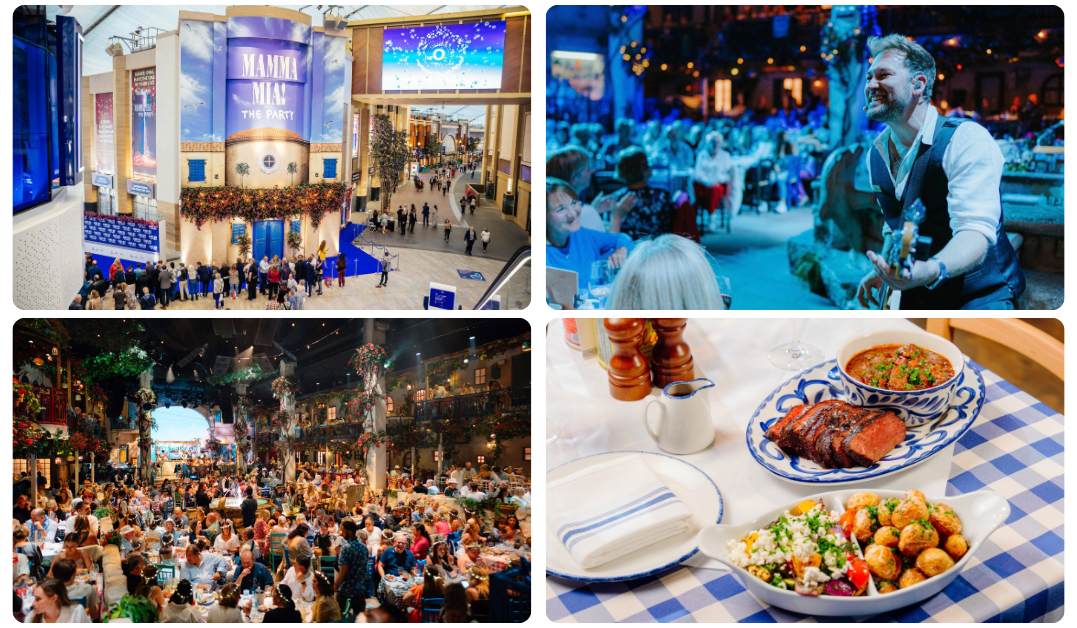
Mamma Mia! The Party, O2 Arena London. Photo credit: Grant Walker.
Why Exclusive Inventory Gives Distributors a Catalogue Edge
For distributors evaluating connectivity partnerships, the question isn't just how many venues are available. It's which ones, and what product they offer. A platform with thousands of generic attractions but no access to premium, exclusive, or complex inventory offers limited differentiation.
Ingresso delivers on both fronts. A single ticketing integration to Ingresso unlocks exclusive inventory through strategic venue partnerships, as well as technically complex products that most APIs cannot support. The catalogue spans global attractions, live events, West End theatre, major sporting events, and unique experiences, all from one connection.
Venues manage inventory, pricing and data requirements; the Ingresso API allows connected distributors to receive this inventory automatically. Venues achieve broader reach without operational burden. Distributors access differentiated products without disproportionate resource and complexity.
For the broader inventory strategy case, read One API. Every Category: The Case for a Unified Inventory Strategy.

Dynamic Pricing In Ticketing: Automated, Accurate, And Already Available

IPW 2026: Ticketing Industry Trends Shaping Live Entertainment Distribution